
Solitaire may look like a simple card game, but winning consistently requires planning, patience, and smart decision-making. While luck determines the initial arrangement of the cards, the choices you make during the game can have a major impact on the outcome.
Whether you are a beginner or an experienced player, learning the best Solitaire strategies can help you make better moves, avoid common mistakes, and improve your chances of winning.
Why Strategy Matters in Solitaire
In classic Klondike Solitaire, players must organize 52 cards into four foundation piles. The cards are shuffled before each game, so every deal can present a different challenge.
You cannot control the cards you receive, but you can control how you play them.
Good Solitaire strategy involves:
-
Revealing hidden cards efficiently
-
Creating useful tableau spaces
-
Managing the stock and waste piles
-
Choosing the right cards to move
-
Planning several moves ahead
-
Avoiding moves that limit future options
The goal is not simply to make a legal move. Instead, you should look for the move that gives you the greatest advantage.
1. Prioritize Revealing Face-Down Cards
One of the most important Solitaire strategies is to reveal hidden cards whenever possible.
Face-down cards limit your available choices. Once a hidden card is turned face up, it may provide a valuable Ace, low card, or another card needed to continue a sequence.
For example, if you have two possible moves, choose the one that exposes a hidden card when it does not create another major problem.
Tip: Always look at which move will reveal the most information before making your decision.
2. Look for Aces and Twos Early
Aces and Twos are particularly important because they can be moved directly to the foundation.
Moving an Ace to its foundation creates a starting point for building that suit. A Two can then be placed on top of it when available.
However, do not automatically move every card to the foundation without thinking. Sometimes a low card may temporarily be more useful in the tableau.
The best approach is to consider both the immediate benefit and the future consequences of the move.
3. Create Empty Tableau Columns Carefully
An empty tableau column is a valuable resource in Klondike Solitaire.
Once a column is empty, you can normally place a King or a sequence beginning with a King into that space.
Creating an empty column can allow you to move large sequences and uncover additional cards. However, clearing a column without having a useful King available may not always help.
Best strategy: Create empty spaces when you have a clear plan for how to use them.
4. Choose the Right King
When you have an empty tableau column, you may have several Kings available. Do not automatically move the first King you see.
Consider:
-
Which King allows you to move the most cards?
-
Which King helps reveal a hidden card?
-
Which King creates better color and suit combinations?
-
Which King will leave useful cards available?
Choosing the right King can make a significant difference in difficult Solitaire games.
5. Build Tableau Sequences Strategically
The tableau is built in descending order with alternating colors.
For example: Red Queen → Black Jack → Red 10 → Black 9
Although several legal moves may be available, some sequences are more useful than others.
Try to keep important cards accessible and avoid creating arrangements that block cards you may need later.
6. Do Not Move Cards Automatically to the Foundation
Moving cards to the foundation is usually the ultimate goal, but doing so too early can sometimes reduce your options.
For example, a low card might be useful in the tableau to help move another sequence or reveal a hidden card.
Before sending a card to the foundation, ask yourself “Will I need this card in the tableau first?” If moving it to the foundation does not help your current position, keeping it available may be the better choice.
7. Use the Stock Pile Carefully
The stock pile can either help you progress or make a game more difficult.
Before drawing a new card, examine the current tableau carefully. There may already be a useful move available.
When drawing from the stock, pay attention to the order of cards. If you are playing Draw Three Solitaire, for example, the position of each card can affect when it becomes available.
Good stock management is one of the key differences between beginner and experienced Solitaire players.
8. Think About the Waste Pile
The waste pile contains cards that have been drawn from the stock.
Do not focus only on the top card. Try to remember which cards are underneath it and consider how the stock order may affect future moves.
If a useful card is temporarily blocked, you may need to make another move before it becomes accessible.
This is particularly important when playing more challenging Solitaire variations.
9. Plan Several Moves Ahead
One of the most effective ways to improve at Solitaire is to stop thinking about only the current move.
Before moving a card, consider what that move will make possible.
For example: Move A → Reveal a card → Create an empty column → Move a King → Reveal another card
Thinking in sequences like this helps you recognize combinations that may not be obvious at first.
10. Protect Your Options
Having more available moves generally gives you greater flexibility.
Avoid making moves that unnecessarily reduce your options.
For example, if moving a card would block another important card or create an awkward tableau sequence, consider whether there is a better alternative.
A strong Solitaire player does not simply look for the fastest move. They look for the move that preserves future possibilities.
11. Consider Both Red and Black Cards
Because tableau sequences require alternating colors, color management is an important part of Solitaire strategy.
Suppose you need to move a black 8. If there are two red 9s available, think about which red 9 creates the better overall position.
The choice may affect which cards remain accessible and which sequences can be moved later.
Always consider the larger tableau rather than looking at only two cards.
12. Avoid Unnecessary Moves
More moves do not necessarily mean better gameplay.
Moving a card simply because you can may place it in a less useful position. Before making a move, ask whether it:
-
Reveals a hidden card
-
Opens a useful column
-
Helps build a foundation
-
Creates a valuable sequence
-
Improves access to the stock
-
Gives you more future options
If a move accomplishes none of these things, it may be better to wait.
13. Use the Undo Button to Learn
Many online Solitaire games include an Undo feature.
Instead of using it only after making a mistake, you can use it as a learning tool. Try one move, examine the result, and then consider whether another move would have produced a better position.
This can help beginners understand how different decisions affect the game.
Over time, you will begin to recognize strong moves without needing to experiment as often.
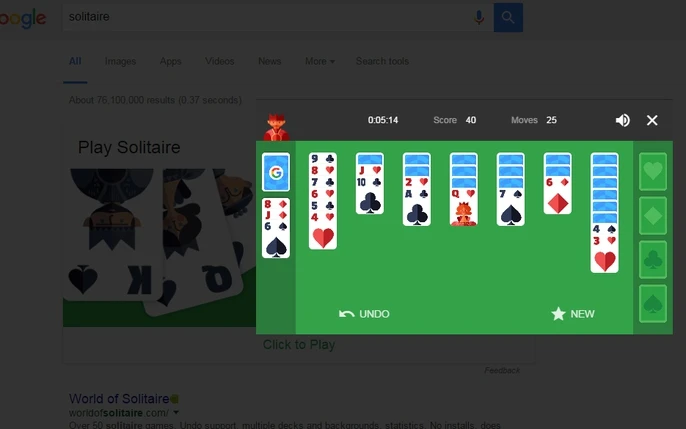
14. Adapt Your Strategy to the Game Type
Not every Solitaire variation follows the same rules.
For example:
-
Klondike Solitaire focuses on tableau organization and foundation building.
-
Spider Solitaire requires managing long sequences and multiple suits.
-
FreeCell provides more information because most cards are visible.
-
Pyramid Solitaire focuses on matching cards that add up to a specific value.
A strategy that works well in one version may not work as effectively in another.
Learn the rules and objectives of the specific Solitaire game you are playing before developing your strategy.
15. Do Not Give Up Too Quickly
Some Solitaire games can look impossible even when a winning sequence is still available.
Before restarting, examine the tableau carefully. There may be a move you have overlooked or a stock card that can unlock the position.
At the same time, some deals genuinely cannot be completed. Recognizing when a game has become unsolvable is also part of becoming a better player.
Common Solitaire Mistakes to Avoid
Understanding what not to do can be just as useful as learning advanced strategies.
Moving the First Available Card
The first legal move is not necessarily the best move. Compare your options before acting.
Ignoring Hidden Cards
Face-down cards limit your choices. Prioritize moves that reveal them when possible.
Wasting Empty Columns
An empty tableau column is valuable. Use it strategically rather than filling it immediately without a clear reason.
Ignoring Stock Order
Especially in Draw Three Solitaire, the order of the stock can determine whether important cards become accessible.
Moving Everything to the Foundation
Foundation building is important, but some cards may be more useful in the tableau temporarily.
Advanced Solitaire Strategy
Once you understand the basic strategies, you can start thinking more deeply about card probability and information.
Track Important Cards
Pay attention to where key cards are located, particularly Kings, Aces, and low-numbered cards.
Knowing which cards have already appeared can help you make better decisions.
Compare Multiple Possible Moves
If two moves are legal, do not automatically choose the first one you notice.
Consider which move:
-
Reveals more hidden cards
-
Creates more future moves
-
Opens a tableau column
-
Gives better access to the stock
-
Keeps important cards available
Balance Short-Term and Long-Term Goals
Sometimes the best move does not provide an immediate benefit.
A move that appears slow may eventually allow you to reveal several hidden cards or create an empty column.
Strong Solitaire play requires balancing immediate progress with long-term opportunities.
How to Improve Your Solitaire Win Rate
If you want to become a better Solitaire player, practice is important.
Try to develop these habits:
-
Examine the entire tableau before moving
-
Prioritize hidden cards
-
Think several moves ahead
-
Manage the stock carefully
-
Use empty columns strategically
-
Avoid unnecessary moves
-
Learn from unsuccessful games
-
Experiment with different strategies
-
Review your decisions after each game
The more games you play, the easier it becomes to recognize useful patterns.
Is There a Guaranteed Way to Win Solitaire?
There is no universal strategy that guarantees a win in every Solitaire deal.
The initial shuffle plays an important role, and some deals may be unwinnable depending on the game version and rules.
However, applying strong Solitaire strategies can significantly improve your decision-making and increase your chances of successfully completing winnable games.
Frequently Asked Questions About Solitaire Strategies
What is the best Solitaire strategy?
The best general strategy is to prioritize revealing hidden cards, create useful empty tableau spaces, manage the stock carefully, and think several moves ahead.
Should I always move an Ace to the foundation?
Not necessarily. Although Aces are important, keeping an Ace or another low card in the tableau may sometimes create a better opportunity.
When should I create an empty tableau column?
Create an empty column when it provides a clear strategic advantage, especially when you have a King or King sequence ready to use.
Is Solitaire mostly luck or skill?
Solitaire involves both luck and skill. The shuffle determines the starting position, while your decisions determine how effectively you handle that position.
Can I improve my Solitaire skills with practice?
Yes. Regular practice helps you recognize patterns, evaluate moves, manage the stock, and plan further ahead.
Winning at Solitaire is not simply about moving cards as quickly as possible. The best players think carefully about every decision and try to maintain as many future options as possible.
By revealing hidden cards, managing the stock, creating empty columns strategically, choosing the right sequences, and planning several moves ahead, you can significantly improve your Solitaire gameplay.
Start with these basic strategies, practice regularly, and gradually develop your own playing style. With patience and experience, you will have a much better chance of turning difficult Solitaire deals into successful wins.