
Solitaire is one of the most popular card game genres in the world. While many people immediately think of classic Klondike Solitaire, there are actually dozens of different solitaire variations to explore. Each version has its own rules, layout, strategies, and level of difficulty.
The best part is that many free solitaire games can be played online without downloading software or purchasing expensive equipment. Whether you prefer simple gameplay, challenging puzzles, relaxing card games, or strategic challenges, there is likely a solitaire variation that matches your preferences.
In this guide, we will explore some of the different types of free Solitaire games you should try, including classic favorites such as Klondike, Spider, FreeCell, Pyramid, TriPeaks, and Yukon.
What Are Free Solitaire Games?
Free solitaire games are digital versions of solitaire card games that can be played without paying to access the basic gameplay. They are commonly available on computers, smartphones, tablets, and web browsers.
Most solitaire games use a standard deck of playing cards, although some variations use two decks or introduce unique rules.
The main goal differs depending on the variation. Players may need to:
- Build foundation piles by suit.
- Clear all cards from the tableau.
- Match cards with specific values.
- Build sequences in descending or ascending order.
- Remove pairs of cards.
- Complete special layouts.
- Solve the board using strategic moves.
This variety is one of the reasons solitaire remains so popular.
1. Klondike Solitaire
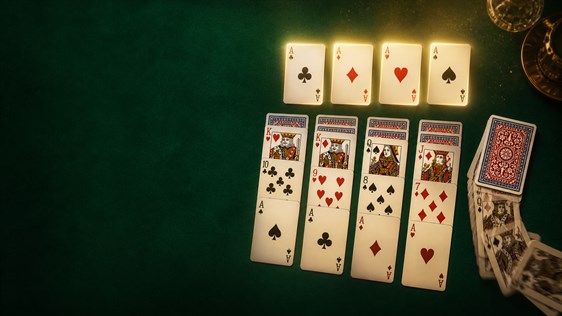
Klondike Solitaire is probably the most recognizable solitaire variation. It is often simply called Classic Solitaire because it became the standard version familiar to millions of computer users.
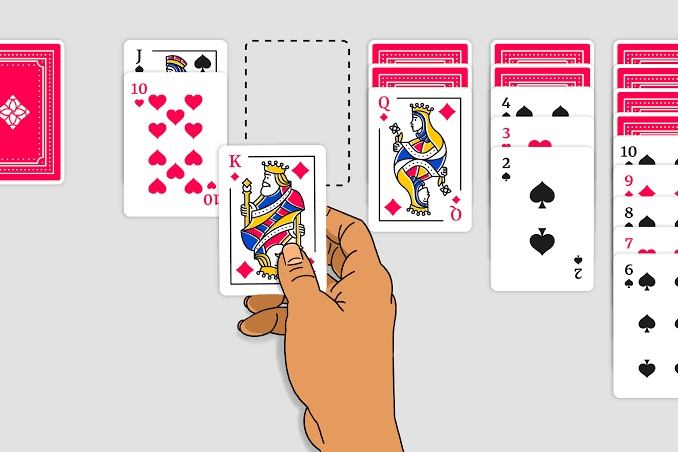
The game uses a 52-card deck and features seven tableau columns. Players build sequences in descending order while alternating red and black suits.
The ultimate goal is to move all cards to four foundation piles, beginning with the Aces and continuing through the Kings.
Why Try Klondike Solitaire?
- Easy to learn.
- Familiar classic rules.
- Suitable for beginners.
- Available on almost every platform.
- Offers both relaxing and challenging games.
If you are new to solitaire, Klondike is an excellent place to start.
2. Spider Solitaire
Spider Solitaire is another extremely popular variation. Unlike Klondike, Spider usually uses two standard decks, giving players 104 cards.
The objective is to create complete sequences of cards from King down to Ace in the same suit. Once a complete sequence is formed, it is removed from the tableau.
Spider Solitaire is available in several difficulty levels:
- One Suit: Easiest version.
- Two Suits: Moderate difficulty.
- Four Suits: Most challenging version.
Why Try Spider Solitaire?
Spider is ideal for players who enjoy deeper strategy. Managing multiple sequences and suits can create complicated situations that require careful planning.
3. FreeCell Solitaire
FreeCell is one of the most strategic solitaire games available. It uses a standard 52-card deck, and almost every card is visible from the beginning.
The game features four temporary spaces known as free cells. Players can place individual cards in these spaces while rearranging the tableau.
The objective is to move all cards to four foundation piles.
Why Try FreeCell?
FreeCell is particularly appealing to players who enjoy:
- Logical thinking.
- Long-term planning.
- Problem-solving.
- Strategic decision-making.
- Games with less dependence on luck.
Because most cards are visible, players have more information when planning their moves.
4. Pyramid Solitaire
Pyramid Solitaire offers a completely different style of gameplay. Instead of primarily building card sequences, players remove pairs of cards whose values add up to 13.
For example:
- Ace + Queen = 13
- 2 + Jack = 13
- 3 + 10 = 13
- 4 + 9 = 13
- 5 + 8 = 13
- 6 + 7 = 13
Kings are usually removed individually because they are worth 13.
Why Try Pyramid Solitaire?
Pyramid is a great choice if you enjoy:
- Quick games.
- Number-based puzzles.
- Simple rules.
- Matching mechanics.
- Short gaming sessions.
Its unique scoring system makes it very different from traditional solitaire.
5. TriPeaks Solitaire
TriPeaks Solitaire is known for its distinctive three-peak layout.
Players remove cards from the tableau by selecting cards that are one value higher or lower than the current card in the waste pile.
For example, if the current card is a 7, you may be able to play a 6 or an 8.
The objective is generally to clear the three peaks.
Why Try TriPeaks?
TriPeaks is:
- Fast-paced.
- Easy to understand.
- Suitable for casual players.
- Great for short sessions.
- More dynamic than traditional solitaire.
It is an excellent option when you want a quick card puzzle.
6. Golf Solitaire
Golf Solitaire is another fast and entertaining solitaire variation. Its name comes from the idea of trying to achieve a low score, similar to golf.
The basic objective is to remove cards from the tableau by selecting cards that are one rank higher or lower than the current waste card.
The rules are simple, but choosing the right sequence can make a significant difference.
Why Try Golf Solitaire?
Golf Solitaire is worth trying if you want a game that is:
- Quick.
- Simple.
- Easy to replay.
- Suitable for beginners.
- Focused on short-term decisions.
7. Yukon Solitaire
Yukon Solitaire looks somewhat similar to Klondike, but its rules allow players to move groups of cards in ways that create different strategic possibilities.
One major difference is that cards in the tableau are generally dealt face up, giving players more information about the available moves.
Why Try Yukon Solitaire?
Yukon is a good choice for players who already enjoy Klondike but want something more challenging.
It provides:
- More visible information.
- More complicated sequences.
- Greater strategic freedom.
- A different approach to tableau management.
8. Canfield Solitaire
Canfield Solitaire is another classic solitaire variation. It is known for its challenging gameplay and distinctive setup.
Compared with beginner-friendly solitaire games, Canfield can require more careful decision-making because players have fewer opportunities to recover from poor moves.
Why Try Canfield Solitaire?
Canfield is suitable for experienced players looking for:
- A higher level of difficulty.
- Traditional card-game mechanics.
- Strategic planning.
- A new challenge beyond Klondike.
9. Scorpion Solitaire
Scorpion Solitaire is closely related to Spider Solitaire but has its own unique rules and layout.
The game typically uses a standard 52-card deck. Players arrange cards in descending sequences of the same suit while trying to expose and organize hidden cards.
Scorpion can be significantly more challenging than basic solitaire variations.
Why Try Scorpion Solitaire?
This game is a good option for advanced players who enjoy:
- Difficult card puzzles.
- Complex sequences.
- Strategic planning.
- Challenging layouts.
10. Forty Thieves Solitaire
Forty Thieves is a challenging solitaire variation that typically uses two standard decks.
Players must build foundation piles from Ace to King while managing a large tableau.
Because the game uses many cards and has relatively restrictive movement rules, it can be considerably harder than classic Klondike.
Why Try Forty Thieves?
Try it if you are looking for:
- A difficult solitaire challenge.
- Long gameplay sessions.
- Strategic card management.
- A game that rewards patience.
11. Accordion Solitaire
Accordion Solitaire is a unique variation in which cards are gradually compressed into fewer piles.
The game has relatively simple rules, but finding the best moves can be surprisingly difficult.
Its unusual gameplay makes it an interesting option for players who have already tried the most common solitaire variations.
Why Try Accordion Solitaire?
It offers a completely different experience from traditional solitaire and can be especially appealing to players who enjoy unusual puzzle mechanics.

12. Clock Solitaire
Clock Solitaire is one of the simplest solitaire variations to understand.
Cards are arranged into positions corresponding to the numbers on a clock. The objective is to place cards into their correct positions according to their ranks.
Unlike strategic games such as FreeCell, Clock Solitaire relies heavily on the order of the cards.
Why Try Clock Solitaire?
Clock Solitaire is ideal for players who want:
- Very simple rules.
- A traditional card-game experience.
- Quick rounds.
- A game with minimal decision-making.
How to Choose the Best Free Solitaire Game
With so many variations available, choosing one can initially seem difficult. The easiest approach is to consider your preferred style of gameplay.
For beginners
Start with Klondike, Pyramid, or TriPeaks. Their rules are relatively easy to understand and they provide a gentle introduction to solitaire.
For strategy lovers
Try FreeCell or Spider Solitaire. These games provide more opportunities for planning and require careful decision-making.
For experienced players
Scorpion, Canfield, Yukon, and Forty Thieves can provide a greater challenge.
For quick entertainment
Choose Golf or TriPeaks. Both can be played relatively quickly and are suitable for short breaks.
Benefits of Playing Free Solitaire Games Online
Online solitaire games offer several advantages compared with physical card games.
Easy Access
You do not need to find a physical deck of cards. Simply open a browser and start playing.
Free Entertainment
Many online platforms offer free solitaire games, making them an affordable source of casual entertainment.
Play Anywhere
Responsive web games can often be played on:
- Desktop computers.
- Laptops.
- Smartphones.
- Tablets.
Convenient Features
Digital solitaire games can include features such as:
- Undo.
- Hints.
- Automatic moves.
- Score tracking.
- Game statistics.
- Restart options.
- Daily challenges.
These features make the classic card-game experience more convenient.
Why Solitaire Has So Many Variations
The flexibility of a standard deck of cards makes solitaire ideal for creating different rules and layouts.
By changing factors such as:
- Number of decks.
- Tableau layout.
- Card movement rules.
- Foundation rules.
- Matching requirements.
- Scoring systems.
Developers and card-game enthusiasts can create completely different experiences from the same basic deck.
This variety is one of the biggest reasons solitaire has remained popular for so many years.
Tips for Trying Different Solitaire Games
If you want to explore more solitaire variations, do not limit yourself to one game.
Start with a familiar version such as Klondike, then gradually try games with different mechanics.
For example: Klondike → FreeCell → Spider → Pyramid → TriPeaks → Yukon → Scorpion
Trying different games helps you discover which style suits you best.
You may find that you prefer strategic games like FreeCell, sequence-based games like Spider, or fast-paced variations such as TriPeaks.
There are many different types of free solitaire games to explore, and each variation offers something unique. Klondike is perfect for beginners who want the classic experience, while FreeCell provides deeper strategic gameplay. Spider is ideal for players who enjoy complex sequences, whereas Pyramid, TriPeaks, and Golf offer faster and more casual experiences.
For players who want a bigger challenge, games such as Yukon, Canfield, Scorpion, and Forty Thieves provide plenty of opportunities to test strategic thinking.
The best way to find your favorite is simply to try different variations. Since many free Solitaire games are available online, you can explore classic and modern card games without spending money or downloading complicated software.
Whether you have a few minutes or several hours, there is almost certainly a solitaire game that matches your playing style.