
FreeCell Solitaire is one of the most popular classic card games for players who enjoy strategy, logic, and careful planning. Unlike many solitaire variations, FreeCell gives players access to almost every card from the beginning. This means that success depends less on luck and more on making smart decisions.
However, beginners often make simple mistakes that can quickly turn a promising game into an unsolvable position. Learning these mistakes early can help new players understand the game faster, improve their strategy, and win more FreeCell games.
In this guide, we will explore the most common FreeCell mistakes beginners should avoid, along with practical tips for making better decisions.
What Is FreeCell?
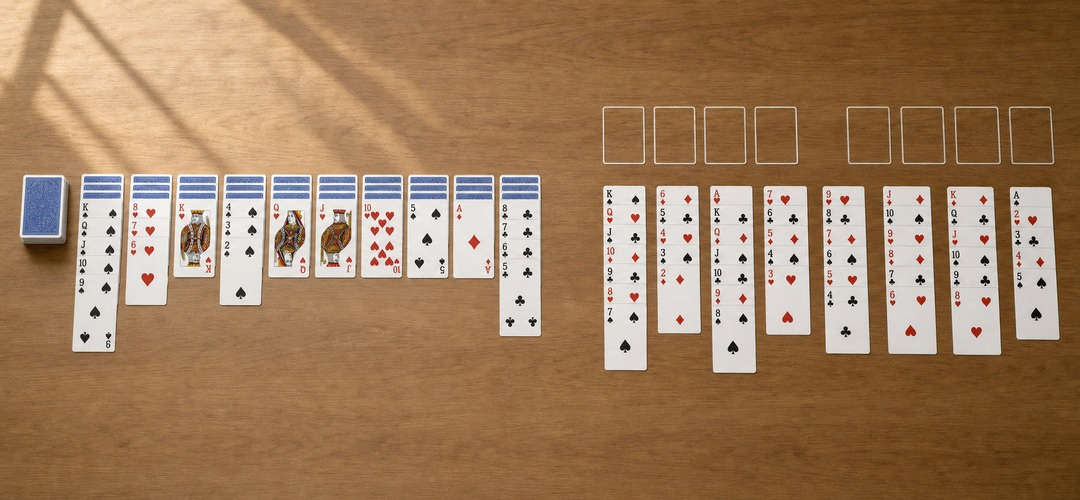
FreeCell is a solitaire card game played with a standard 52-card deck. The cards are dealt face up into eight tableau columns, giving players a clear view of the entire board.
The game includes four temporary spaces called free cells and four foundation piles.
The main objective is to move every card to the foundation piles, building each suit from Ace to King.
The basic areas of a FreeCell game are:
- Tableau: Eight columns containing the cards.
- Free Cells: Four temporary spaces for individual cards.
- Foundation Piles: Four piles built from Ace to King.
- Empty Tableau Columns: Open spaces that can be used to move and reorganize cards.
Because most cards are visible, FreeCell rewards careful planning rather than random moves.
Why Do Beginners Struggle With FreeCell?
FreeCell looks simple at first. You can see the cards, the rules are relatively easy, and there are no complicated controls.
However, the game requires players to think about the consequences of their decisions.
A move that looks helpful now may make the board much harder several turns later.
Common beginner problems include:
- Filling the free cells too quickly.
- Ignoring empty columns.
- Moving cards without a plan.
- Blocking important cards.
- Sending cards to the foundation too early.
- Focusing only on immediate moves.
- Failing to build long sequences.
- Creating unnecessary empty spaces.
- Not considering alternative moves.
Understanding these mistakes is one of the fastest ways to improve.
1. Using All Four Free Cells Too Early
One of the most common FreeCell mistakes is filling the free cells as soon as possible.
The four free cells may look like convenient storage spaces, but they are actually valuable strategic resources.
Once all four are occupied, you have very little temporary space available.
How to Avoid This Mistake
Try to keep at least one or two free cells available whenever possible.
Before placing a card in a free cell, ask: Do I really need to use this space right now?
If the card can remain in the tableau without causing a problem, keeping the free cell empty may give you more flexibility later.
2. Moving Cards Without a Clear Plan
Beginners often move a card simply because the move is available.
For example, if a red 8 can be placed on a black 9, it may seem logical to make the move immediately.
However, the move might block another card or reduce your future options.
Better Approach
Before making a move, think about what it accomplishes.
A strong move should ideally:
- Reveal a useful card.
- Create an empty column.
- Build a useful sequence.
- Free a valuable card.
- Improve your access to the tableau.
Avoid making moves simply because they are possible.
3. Ignoring Empty Tableau Columns
Empty columns are extremely valuable in FreeCell.
An empty tableau space can provide much more flexibility than a single free cell because it can sometimes accommodate a sequence of cards.
Beginners may create an empty column and immediately fill it with the first available card.
This can waste an important strategic opportunity.
How to Use Empty Columns Effectively
When you create an empty column, consider using it to:
- Move a long sequence.
- Access blocked cards.
- Rearrange the tableau.
- Create another empty column.
- Temporarily store important cards.
Try to keep an empty column available when you expect to need it soon.
4. Filling Empty Columns With the Wrong Card
Creating an empty column is only half the job. Knowing what to put there is equally important.
A common mistake is moving a King into an empty column without considering the consequences.
A King cannot be placed on another card because it has the highest rank. Once placed in an empty column, it can occupy valuable space for a long time.
Better Strategy
Before moving a King into an empty column, ask:
- Is this King part of a useful sequence?
- Can I uncover an important card by moving it?
- Will this block the column?
- Do I need the empty space for another sequence?
Sometimes leaving the column empty is more valuable than immediately filling it.
5. Sending Cards to the Foundation Too Quickly
Moving cards to the foundation is the ultimate objective, so beginners often assume that every available foundation move should be made immediately.
However, this is not always the best choice.
A card that can be placed on the foundation may still be useful in the tableau.
For example, moving a low card to the foundation might prevent you from using it to organize another sequence.
When Should You Move Cards to the Foundation?
Consider moving cards to the foundation when doing so:
- Does not block useful moves.
- Helps expose important cards.
- Improves the overall board.
- Does not interfere with a needed sequence.
The foundation is important, but so is maintaining flexibility.
6. Focusing Only on the Top Cards
Beginners often concentrate on the cards currently available at the bottom of each tableau column.
However, the goal should also be to uncover the cards underneath.
Face-down cards are hidden resources, and exposing them can dramatically increase your available options.
Better Approach
Whenever possible, prioritize moves that reveal new cards.
Ask yourself: Which move gives me access to the most new information?
This simple question can help guide better decisions.
7. Building Sequences Without Thinking Ahead
FreeCell allows players to build descending sequences with alternating colors.
For example:
9♠ → 8♥ → 7♣ → 6♦
Creating a sequence can be useful, but beginners sometimes build sequences without considering what will happen next.
A long sequence may look impressive while actually blocking several important cards.
Better Strategy
Before building a sequence, consider:
- Can I move it later?
- Does it expose a useful card?
- Does it block another card?
- Will it help create an empty column?
- Is the sequence easy to break apart if necessary?
The best sequence is not always the longest one.
8. Breaking Useful Sequences Too Early
The opposite mistake also happens.
Some beginners constantly break apart sequences because they want to move individual cards.
If a sequence is helping organize the tableau, breaking it apart may reduce your options.
Before separating a sequence, determine whether you have a specific purpose for doing so.
If not, it may be better to leave the sequence intact.
9. Ignoring the Color Pattern
FreeCell requires cards to be placed in descending order with alternating colors.
Beginners sometimes focus only on card ranks and forget to consider the color structure.
For example, a red 7 can be placed on a black 8, but not on another red 8.
Keeping the color pattern in mind helps you identify useful sequences before making a move.
10. Making the First Available Move
One of the biggest beginner habits is choosing the first legal move they notice.
FreeCell often provides multiple legal moves, but they are not equally useful.
For example, you might have three possible moves:
- Move a card to another tableau column.
- Place a card in a free cell.
- Move a card to the foundation.
All three may be legal, but one may provide significantly more strategic value.
Better Approach
Compare your options before moving.
Ask:
Which move gives me the most flexibility?
This mindset is essential for improving at FreeCell.

11. Not Planning Several Moves Ahead
FreeCell rewards players who think beyond the current move.
A beginner may think: “I can move this card now.”
An experienced player is more likely to think: “If I move this card, I can expose another card, then create an empty column, and then move this sequence.”
Try to visualize at least two or three moves ahead.
As you become more comfortable with the game, you can gradually plan even further.
12. Creating Too Many Empty Spaces
Empty spaces are valuable, but having an empty column is not automatically good.
Beginners sometimes move cards around simply to create empty spaces without having a clear purpose.
This can create a disorganized board.
Better Strategy
Create an empty column when it gives you a specific advantage, such as:
- Moving a large sequence.
- Uncovering important cards.
- Rearranging blocked cards.
- Creating additional mobility.
Empty spaces should be used strategically, not simply because they are available.
13. Blocking Low Cards
Aces and low cards are especially important because they eventually need to reach the foundation.
If you place several high cards in a way that blocks an important low card, you may make the game unnecessarily difficult.
Pay attention to cards such as:
- Aces.
- 2s.
- 3s.
- 4s.
Try to keep routes open so these cards can eventually reach their foundation piles.
14. Forgetting to Look for Foundation Opportunities
While moving cards to the foundation too early can be a mistake, ignoring the foundation completely is another problem.
When an Ace or low card becomes safely available, moving it to the foundation can free space and simplify the tableau.
The key is balance.
Do not automatically send every card to the foundation, but do not ignore useful foundation moves either.
15. Not Using the Undo Function for Learning
Many digital FreeCell games provide an Undo option.
Beginners sometimes use it only after making a serious mistake.
However, Undo can also be a useful learning tool.
You can test a move, observe the consequences, and then return to the previous position if the move creates problems.
This allows you to experiment with different strategies without restarting the entire game.
16. Trying to Solve Everything at Once
FreeCell can look overwhelming when there are many possible moves.
Instead of trying to solve the entire board immediately, break the game into smaller objectives.
For example:
- Free an Ace.
- Reveal a blocked card.
- Create an empty column.
- Organize a sequence.
- Move several cards toward the foundation.
Small improvements can eventually lead to a winning position.

17. Giving Up Too Quickly
A difficult FreeCell position does not necessarily mean the game is lost.
Sometimes the best move is not obvious.
Before restarting, look carefully for:
- A hidden legal move.
- A sequence that can be rearranged.
- An opportunity to empty a column.
- A card that can be moved to the foundation.
- A way to free a blocked card.
Learning to recognize these opportunities takes practice.
How to Avoid Common FreeCell Mistakes
The easiest way to improve is to develop a consistent decision-making process.
Before every important move, consider these questions:
Question 1: Does this move reveal a card?
If yes, it may be useful.
Question 2: Does it create or preserve an empty column?
If yes, it may increase your flexibility.
Question 3: Does it use a free cell?
If yes, make sure the space is genuinely necessary.
Question 4: Does it block another card?
If yes, look for an alternative.
Question 5: What can I do next?
If you cannot identify a useful follow-up move, reconsider the move.
This simple checklist can significantly improve your decision-making.
A Simple FreeCell Strategy for Beginners
If you are completely new to FreeCell, try following this basic strategy.
Step 1: Find the Aces
Look for all four Aces and determine how easily they can reach the foundation.
Step 2: Identify Low Cards
Pay attention to 2s, 3s, and 4s that may become available.
Step 3: Reveal Blocked Cards
Prioritize moves that uncover cards hidden behind other tableau cards.
Step 4: Create an Empty Column
Look for opportunities to clear one tableau column.
Step 5: Preserve Free Cells
Use the free cells only when they provide a clear advantage.
Step 6: Build Useful Sequences
Create descending alternating-color sequences that improve your ability to move cards.
Step 7: Move Cards to the Foundation Carefully
Send cards to the foundation when doing so helps rather than limits your future options.
Step 8: Plan Ahead
Before every major move, consider what the board will look like afterward.
Why FreeCell Is Great for Beginners
FreeCell is an excellent card game for beginners because it combines simple rules with meaningful strategic decisions.
Unlike many games that depend heavily on hidden cards and luck, FreeCell gives players a clear view of the board.
This allows new players to learn from their decisions.
When you make a mistake, you can often understand why the position became difficult. Over time, this encourages better planning and logical thinking.
The game also has a gentle learning curve. You can understand the basic rules quickly and gradually develop more advanced strategies through practice.
FreeCell for beginners can seem simple at first, but avoiding common mistakes is essential for becoming a better player. The most important lessons are to protect your free cells, use empty columns wisely, avoid unnecessary moves, reveal blocked cards, and think about the consequences of every decision.
Remember that FreeCell is not about making the fastest move. It is about making the best move.
With practice, you will begin to recognize useful patterns, manage the tableau more effectively, and plan several moves ahead. By avoiding the common mistakes discussed in this guide, beginners can build a strong foundation and enjoy more successful FreeCell games.