
FreeCell is one of the most recognizable Solitaire card games, enjoyed by players who appreciate simple rules, thoughtful planning, and satisfying challenges. Unlike many modern games that rely on fast reactions or complicated mechanics, FreeCell focuses on logic, patience, and strategic decision-making. Its straightforward gameplay makes it accessible to beginners while offering enough depth to keep experienced players interested.
Today, FreeCell remains popular across different age groups. Players can enjoy it on computers, smartphones, tablets, and online gaming websites, often without downloading additional software. Whether someone wants a relaxing activity during a break or a challenging card puzzle to solve, FreeCell offers a convenient and familiar gaming experience.
But what makes this classic card game so appealing to people of different ages? From its easy-to-understand rules to its strategic depth and accessibility, several factors explain why FreeCell continues to attract players around the world.
What Is the FreeCell Card Game?
FreeCell is a Solitaire-style card game played with a standard 52-card deck. The objective is to move all cards to four foundation piles, arranging each suit in ascending order from Ace to King.
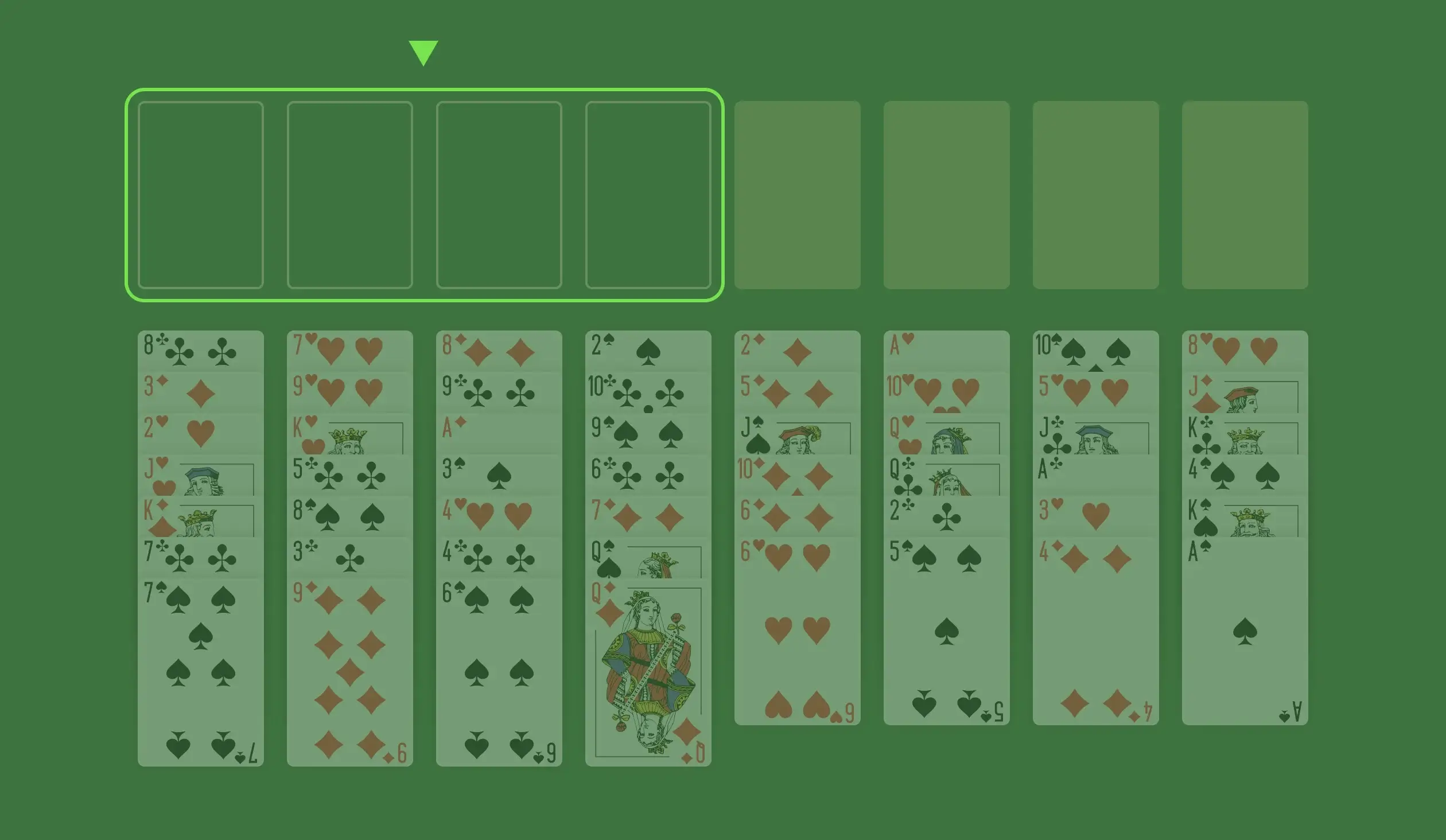
At the beginning of a standard game, all 52 cards are dealt face up into eight tableau columns. Four free cells provide temporary storage spaces for individual cards, while the four foundation piles serve as the final destinations for completed suits.
Unlike Klondike Solitaire, where many cards begin face down, FreeCell allows players to see nearly all the information needed to plan their moves from the start.
The main challenge is deciding how to move cards efficiently without blocking important sequences. Players must balance the use of free cells, empty tableau columns, and available card movements to reach the final objective.
These simple rules create a game that is easy to learn but can require considerable thought to master.

1. Simple Rules Make FreeCell Accessible to Everyone
One reason FreeCell remains popular is its relatively straightforward objective. Players do not need to memorize a large set of complicated rules before starting their first game.
The basic rules include:
- Move cards between tableau columns in descending order.
- Alternate colors when building sequences in the tableau.
- Use free cells to temporarily hold individual cards.
- Move Aces to the foundation piles when available.
- Build each foundation pile from Ace to King by suit.
- Use empty tableau columns strategically to rearrange cards.
Once players understand these rules, they can begin exploring different strategies through practice.
Beginners may initially focus on making legal moves and freeing blocked cards. As they gain experience, they can learn to plan several steps ahead and manage temporary storage more effectively.
This gradual learning process makes FreeCell suitable for people with different levels of card-game experience.
2. FreeCell Offers a Challenge Without Requiring Fast Reactions
Many video games depend on quick reflexes, precise timing, or rapid decisions. FreeCell offers a different experience by emphasizing careful thought rather than speed.
Players can pause to examine the tableau, compare possible moves, and consider how each action will affect the remaining cards.
For example, moving a card into a free cell may create an immediate opportunity, but it also reduces the number of available storage spaces. Similarly, clearing a tableau column may provide valuable flexibility, but players must decide how to use that space effectively.
These decisions reward patience and thoughtful planning.
Because there is generally no need to react within a short time limit in standard FreeCell, players can enjoy the game at their own pace. This makes it appealing to people who prefer strategic puzzles over fast-paced competition.
3. A Game That Appeals to Different Age Groups
FreeCell can appeal to a broad range of players because its basic mechanics are easy to understand, while its strategic possibilities offer room for improvement.
FreeCell for Younger Players
For younger players who already understand basic card ranks and suits, FreeCell can provide an introduction to structured problem-solving.
They can practice following rules, comparing possible moves, and thinking about the consequences of their decisions. However, younger children may need guidance at first because some games require planning several moves in advance.
FreeCell for Adults
Adults may enjoy FreeCell as a short break from work, study, or daily responsibilities. The game offers a clear objective and can be played in relatively short sessions, depending on the deal and the player's experience.
It also provides a familiar alternative to games that require constant online interaction or lengthy commitments.
FreeCell for Older Adults
Older adults who enjoy card games and puzzles may appreciate FreeCell's readable card layout, familiar deck, and turn-based gameplay.
Because the game does not generally depend on rapid reactions, players can take their time evaluating different options. Choosing a version with clear cards and accessible controls can make the experience more comfortable.
FreeCell is not limited to any particular age group. Its appeal depends on individual interests, preferences, and comfort with digital games.
4. FreeCell Encourages Strategic Thinking
FreeCell is more than a game of moving cards from one place to another. Each move can influence the options available later in the game.
Players need to consider which cards are blocking others, how to uncover useful sequences, and when to use temporary storage spaces.
Several strategic principles can help players make better decisions:
Move Aces and low cards when appropriate: These cards can often be transferred to the foundation piles early, depending on the available moves.
Protect free cells: Avoid filling every free cell unless doing so supports a useful sequence.
Create empty tableau columns: An empty column can provide additional flexibility for rearranging cards.
Plan ahead: Consider the next few moves rather than focusing only on the immediate benefit.
Avoid unnecessary movements: A legal move is not always the most useful move for long-term progress.
These principles give players opportunities to refine their approach over time.

5. Every Game Feels Like a New Puzzle
One of FreeCell's lasting strengths is that each deal presents a different arrangement of cards. Even though the rules remain consistent, the available moves and challenges change from game to game.
Some deals may offer straightforward opportunities to move cards to the foundations. Others require players to carefully rearrange several columns before a key card becomes available.
This variation helps keep the experience interesting.
Players may also enjoy returning to a difficult deal to test a different strategy. When a game does not go as planned, reviewing earlier moves can reveal opportunities that were missed.
The combination of familiar rules and changing card arrangements gives FreeCell long-term replay value.
6. FreeCell Is Convenient to Play Online
Modern technology has made FreeCell easier to access than ever. Players no longer need a physical deck of cards or a dedicated desktop program to enjoy the game.
Many websites offer free online FreeCell that runs directly in a browser. Some versions are also available as mobile applications or built-in computer games.
Online FreeCell offers several advantages:
Quick access: Start a game directly in a compatible browser.
No physical cards required: The game manages dealing and card movement automatically.
Easy controls: Move cards with a mouse, clicks, or touchscreen gestures, depending on the version.
Flexible gameplay: Play a quick round or spend more time solving a challenging deal.
Convenient availability: Access the game from compatible devices wherever the service is available.
Some websites also provide features such as Undo, Hint, score tracking, and saved statistics. These options can make the game easier to learn and more convenient to play.
7. FreeCell Provides Entertainment Without Expensive Equipment
Another reason FreeCell remains accessible is that it requires very little equipment. A standard physical deck is enough to play a traditional card game, while digital versions can be enjoyed on many everyday devices.
Free online versions allow players to enjoy the game without purchasing a dedicated gaming system or paying for basic access.
For people who want a simple pastime, this low barrier to entry is appealing.
However, free online games may include advertisements or optional paid features, depending on the website or application. Players should check the available terms before using a service.
8. A Relaxing Alternative to Fast-Paced Games
FreeCell can be a comfortable option for people who prefer quiet, independent activities. It does not usually require multiplayer coordination, constant notifications, or real-time competition.
Players can focus on one deal, think through their options, and stop when they have finished.
Some people enjoy this process as a way to change activities during a break. The game provides enough mental engagement to remain interesting without requiring the same type of rapid response associated with action games.
However, relaxation is subjective. Players who find difficult puzzles frustrating may prefer easier deals or another type of casual game.
For a more relaxed session, try playing without a timer or score target and focus on exploring possible moves.
9. FreeCell Can Support a Habit of Careful Decision-Making
Every move in FreeCell has a potential consequence. A player might gain immediate access to a useful card but lose a free cell that could be needed later.
This encourages players to evaluate choices before acting.
For example, before moving a card into a free cell, consider whether the move will uncover another card or help create a useful sequence. Before clearing a tableau column, think about which cards could benefit from the extra space.
Repeatedly evaluating these decisions gives players practice in planning and comparing alternatives.
FreeCell can provide an enjoyable setting for practicing this type of reasoning, although playing the game alone does not guarantee improvements in general decision-making abilities.
10. FreeCell Is Easy to Learn but Difficult to Master
The balance between accessibility and complexity is one of the main reasons FreeCell continues to appeal to experienced players.
A beginner can learn the objective and start making moves fairly quickly. However, winning consistently requires a deeper understanding of card relationships, temporary storage, and long-term planning.
As players improve, they may begin to recognize patterns and identify moves that create more options later.
For example, an experienced player may delay moving a card to a foundation if keeping it in the tableau helps build a useful sequence. Similarly, they may preserve an empty free cell rather than using it immediately.
These decisions add depth to a game that appears simple at first.
The opportunity to improve without needing to learn an entirely new set of rules gives FreeCell lasting appeal.
11. Tips for Beginners Who Want to Enjoy FreeCell
New players can make the learning process easier by focusing on a few basic strategies.
Keep Free Cells Available
Free cells are valuable because they provide temporary storage for individual cards. Using all of them too early can limit your ability to rearrange the tableau.
Look for Empty Columns
An empty tableau column can be used to organize sequences and move cards more flexibly. Creating one can be an important step toward solving a difficult deal.
Think Before Moving Cards to the Foundations
Moving cards to the foundation piles is often helpful, but it may sometimes be better to keep a card in the tableau temporarily if it supports another sequence.
Examine the Entire Tableau
Do not focus only on the cards that are easiest to move. Check the full layout to identify blocked cards, possible sequences, and opportunities to free up space.
Use Undo and Hints to Learn
If your chosen version offers Undo or Hint, use these tools to understand alternative moves. Try to learn why a move works instead of relying on assistance for every decision.
With practice, these habits can help beginners feel more confident and enjoy the strategic side of FreeCell.
Frequently Asked Questions (FAQs)
Is FreeCell suitable for all ages?
FreeCell can appeal to players of many ages because it uses familiar playing cards and straightforward rules. Younger players may need help learning the strategy, while adults and older players can enjoy it according to their interests and preferences.
Why is FreeCell still popular?
FreeCell remains popular because it combines simple rules with strategic depth. Its visible card layout, replayable deals, and convenient digital versions make it appealing to both casual players and people who enjoy card puzzles.
Is FreeCell a difficult card game to learn?
The basic rules are relatively easy to understand, but developing an effective strategy takes practice. Beginners can start by learning how to move cards, use free cells, and build the foundation piles.
Can I play FreeCell online for free?
Yes. Many websites offer free online FreeCell games that can be played directly in a browser. Some versions may include advertisements or optional paid features.
Does FreeCell require fast reactions?
No. Standard FreeCell is primarily a turn-based strategy game. Players can usually take their time to examine the cards and consider different moves.
Is FreeCell better than Klondike Solitaire?
Neither game is universally better. FreeCell gives players more visible information and emphasizes planning, while Klondike includes hidden cards and stock-pile draws. The best choice depends on the type of challenge you enjoy.
Can FreeCell help improve logical thinking?
FreeCell involves evaluating options, recognizing patterns, and planning sequences. Playing it can provide practice in these activities, although it does not guarantee measurable improvements in broader cognitive abilities.
Can I play FreeCell on a smartphone?
Yes. Many FreeCell websites and applications support smartphones and tablets. Choose a version with clear cards, responsive controls, and a layout suited to your screen size.
FreeCell remains a popular classic card game because it offers an appealing combination of simplicity, strategy, and accessibility. Its familiar rules make it easy to start playing, while the need to manage free cells, organize sequences, and plan ahead provides an ongoing challenge.
The game can appeal to younger players learning card-game basics, adults looking for convenient entertainment, and older players who enjoy thoughtful puzzles. Browser-based versions also make it easy to play without a physical deck or specialized equipment.
Whether you are a beginner or an experienced Solitaire fan, FreeCell offers a flexible way to enjoy a classic card game at your own pace. Its combination of accessible gameplay and strategic depth helps explain why this timeless favorite continues to attract players of different ages.