
Solitaire is a classic single-player card game that is easy to learn and enjoyable for players of all experience levels. With a standard deck of 52 cards, you can play Solitaire almost anywhere and at your own pace.
If you are new to the game, learning the basic Solitaire rules is simple. This guide explains how to play Solitaire, how to arrange the cards, what moves you can make, and how to win the game.
What Is Solitaire?
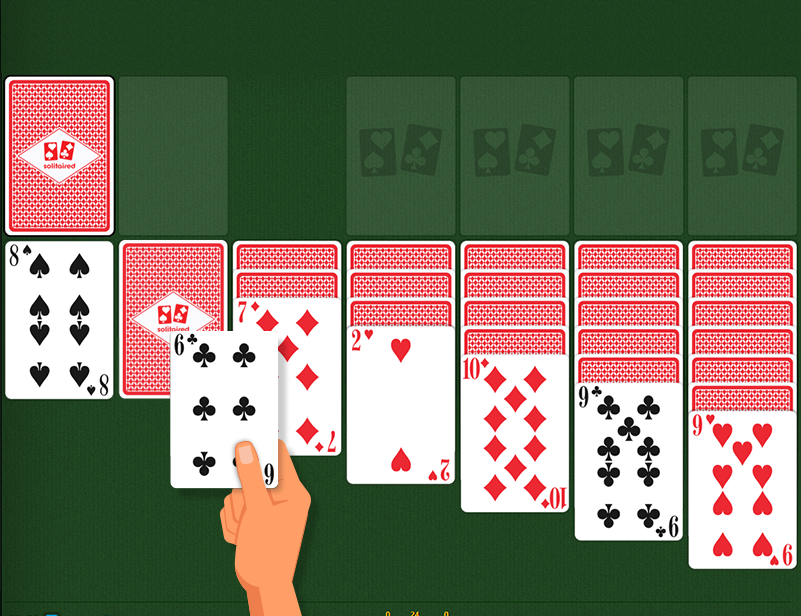
Solitaire is a collection of card games designed for one player. The most popular version is Klondike Solitaire, which is often simply called Solitaire.
The main objective of Klondike Solitaire is to move all 52 cards to four foundation piles. Each foundation is organized by suit, starting with the Ace and continuing in ascending order until the King.
Although the rules are straightforward, Solitaire requires players to plan their moves carefully.
What You Need to Play Solitaire
Classic Klondike Solitaire requires:
-
One standard 52-card deck
-
No Jokers
-
One player
-
A flat playing area
When playing Solitaire online, the cards are automatically shuffled and arranged for you, making it possible to start a game with just a few clicks.
Solitaire Card Layout
Before learning how to play Solitaire, it is important to understand the four main areas of the game.
1. Tableau
The tableau consists of seven columns of cards.
The columns contain different numbers of cards:
-
Column 1: 1 card
-
Column 2: 2 cards
-
Column 3: 3 cards
-
Column 4: 4 cards
-
Column 5: 5 cards
-
Column 6: 6 cards
-
Column 7: 7 cards
Only the top card of each column is face up. The other cards remain face down until they are revealed.
2. Foundation
There are four foundation piles, one for each suit:
-
Hearts
-
Diamonds
-
Clubs
-
Spades
Each foundation starts with an Ace and is built upward to the King.
3. Stock
The stock contains cards that have not been placed in the tableau. You can draw cards from the stock when you need additional moves.
4. Waste Pile
Cards drawn from the stock are placed into the waste pile. Depending on the Solitaire version, you may be able to use the top card of the waste pile in the tableau or foundation.

How to Play Solitaire Step by Step
Now that you understand the layout, let's look at the basic Solitaire instructions.
Step 1: Look for Available Moves
Start by examining the face-up cards in the tableau.
Look for opportunities to move cards between columns or place an Ace or another suitable card onto a foundation pile.
Do not make moves randomly. Think about which move will give you more options later.
Step 2: Build Tableau Columns
In classic Solitaire, tableau cards are arranged in descending numerical order with alternating colors.
For example: Red 9 → Black 8 → Red 7 → Black 6
A black 8 can be placed on a red 9, while a red 7 can be placed on a black 8.
You cannot place a red 8 directly on a red 9 because the colors must alternate.
Step 3: Move Card Sequences
You can move a correctly organized sequence of cards from one tableau column to another.
For example, if you have: Black 8 → Red 7 → Black 6
you can move the entire sequence onto a red 9.
Moving groups of cards can help open new spaces and reveal hidden cards.
Step 4: Reveal Face-Down Cards
Whenever you move the face-up card from a tableau column and expose a face-down card, turn that card face up.
Revealing hidden cards is one of the most important parts of Solitaire because it increases the number of available moves.
Try to prioritize moves that reveal hidden cards whenever possible.
Step 5: Move Aces to the Foundation
When an Ace becomes available, it can usually be moved to one of the foundation piles.
After an Ace, cards of the same suit can be added in ascending order.
For example: Ace → 2 → 3 → 4 → 5
Continue building the foundation until you reach the King.
Step 6: Use the Stock Pile
If there are no useful moves in the tableau, draw cards from the stock.
Depending on the version you are playing, you may draw one card or three cards at a time.
Pay attention to the order of the cards because using the stock effectively can determine whether you can complete the game.
Step 7: Create Empty Tableau Spaces
When all cards have been removed from a tableau column, that column becomes empty.
In standard Klondike Solitaire, only a King or a sequence beginning with a King can be moved into an empty tableau space.
Creating an empty column can be very useful because it gives you additional flexibility for moving card sequences.
How to Win Solitaire
The objective is to move every card into the four foundation piles.
Each foundation must contain cards of the same suit in this order: Ace → 2 → 3 → 4 → 5 → 6 → 7 → 8 → 9 → 10 → Jack → Queen → King
When all four foundation piles are completed, you have successfully won the Solitaire game.
Important Solitaire Rules
Understanding these basic rules will help beginners play more confidently.
Rule 1: Alternate Card Colors
Cards placed in the tableau must alternate between red and black.
Rule 2: Build in Descending Order
Tableau sequences must be built from higher values to lower values.
For example, a 10 can be placed on a Jack, but a 10 cannot be placed on a 9.
Rule 3: Foundations Build Upward
Foundation piles start with an Ace and continue upward by the same suit.
Rule 4: Kings Can Fill Empty Columns
An empty tableau space can normally only be filled by a King or a sequence beginning with a King.
Rule 5: Hidden Cards Should Be Revealed
Turning face-down cards face up gives you more choices and can help you progress through the game.
Solitaire Tips for Beginners
Knowing the rules is only the beginning. These simple strategies can help you play Solitaire more effectively.
Prioritize Hidden Cards
Whenever possible, choose moves that reveal face-down cards. More visible cards usually mean more opportunities.
Move Aces and Twos Early
If an Ace or Two can safely be moved to the foundation, doing so can help clear the tableau and create additional moves.
Think Before Moving a King
Moving a King into an empty column can be useful, but not every King should be moved immediately. Consider whether the empty space could help reveal important cards.
Avoid Unnecessary Moves
Every available move is not necessarily a good move. Try to choose moves that improve your position rather than simply moving cards because you can.
Plan Several Moves Ahead
Before making a move, think about what it will allow you to do next. This is especially important when deciding which tableau card to move or which stock card to use.
Use the Undo Feature When Playing Online
Many online Solitaire games provide an undo button. Beginners can use this feature to experiment with different strategies and understand how individual moves affect the game.
Draw One vs. Draw Three Solitaire
Online Solitaire games may offer different drawing rules.
Draw One
In Draw One Solitaire, you draw one card from the stock at a time. This version is generally easier for beginners because more cards are immediately available.
Draw Three
In Draw Three Solitaire, three cards are typically drawn from the stock at a time. Players must pay closer attention to card order and plan their moves carefully.
Draw Three can provide a greater challenge for experienced Solitaire players.
Common Mistakes Beginners Should Avoid
New players often make a few simple mistakes when learning how to play Solitaire.
Moving cards without a plan: A legal move may still make your position worse.
Ignoring hidden cards: Leaving face-down cards covered for too long can limit your options.
Using the stock too quickly: Drawing cards without first checking the tableau can sometimes waste useful opportunities.
Blocking important cards: Moving a card into a position that prevents another useful move can make the game harder.
Forgetting about empty columns: Empty tableau spaces can be powerful tools when used correctly.
Can Everyone Win at Solitaire?
Not every Solitaire deal is guaranteed to be winnable. The initial shuffle can create different levels of difficulty, and some arrangements may leave no possible path to victory.
However, strategic decisions can greatly influence the outcome of a game.
The more you practice, the better you can recognize useful patterns, avoid unnecessary moves, and plan ahead.
How to Play Solitaire Online
Playing Solitaire online is simple.
-
Open a Solitaire game website.
-
Choose your preferred Solitaire version.
-
Start a new game.
-
Examine the tableau.
-
Move cards according to the rules.
-
Use the stock when necessary.
-
Build the four foundation piles.
-
Continue until all cards are moved to the foundations.
Online Solitaire is convenient because the game automatically handles card shuffling, legal moves, scoring, and other game functions.
Frequently Asked Questions About Playing Solitaire
How many cards do you need for Solitaire?
Classic Klondike Solitaire uses one standard deck of 52 cards.
Can I play Solitaire by myself?
Yes. Solitaire is designed as a single-player card game.
What card can be placed in an empty column?
In classic Klondike Solitaire, only a King or a sequence beginning with a King can be placed in an empty tableau column.
Can you put a red card on another red card?
No. Tableau cards must alternate between red and black.
Which card goes into the foundation first?
The foundation begins with an Ace. Cards of the same suit are then added in ascending order.
Is Solitaire difficult for beginners?
Solitaire is easy to learn because its basic rules are simple. However, winning consistently can require practice and strategic thinking.
Start Playing Solitaire
Learning how to play Solitaire is easy once you understand the tableau, foundation, stock, and waste pile. The basic strategy is to build tableau sequences in descending order with alternating colors, reveal hidden cards, and gradually move each suit to its foundation from Ace to King.
Whether you prefer playing Solitaire online or with a physical deck of cards, the game offers a simple combination of strategy, patience, and entertainment. Start with the basic rules, practice different moves, and you will quickly become more comfortable with this timeless card game.