
Spider Solitaire is one of the most popular and challenging solitaire card games available today. Unlike traditional Klondike Solitaire, Spider Solitaire uses a larger card layout and focuses heavily on building complete sequences of cards in the same suit.
The game is easy to understand but can become surprisingly difficult, especially when playing the Two-Suit or Four-Suit versions. Winning consistently requires careful planning, smart card management, and the ability to think several moves ahead.
Whether you are new to Spider Solitaire or want to improve your skills, understanding the Spider Solitaire rules, tips, and winning strategies can make a significant difference.
In this guide, we will explain how Spider Solitaire works, explore its different difficulty levels, and provide practical strategies to help you win more games.
What Is Spider Solitaire?
Spider Solitaire is a classic solitaire card game that is usually played with 104 cards, or two standard 52-card decks.
The main objective is to arrange cards into complete descending sequences from King to Ace within the same suit. Once a complete sequence is created, it is removed from the tableau.
Unlike Klondike Solitaire, Spider Solitaire does not immediately require players to build four foundation piles. Instead, the main challenge is organizing the tableau and creating complete same-suit sequences.
Spider Solitaire can be played in several versions:
- One-Suit Spider Solitaire
- Two-Suit Spider Solitaire
- Four-Suit Spider Solitaire
Each version offers a different level of difficulty.
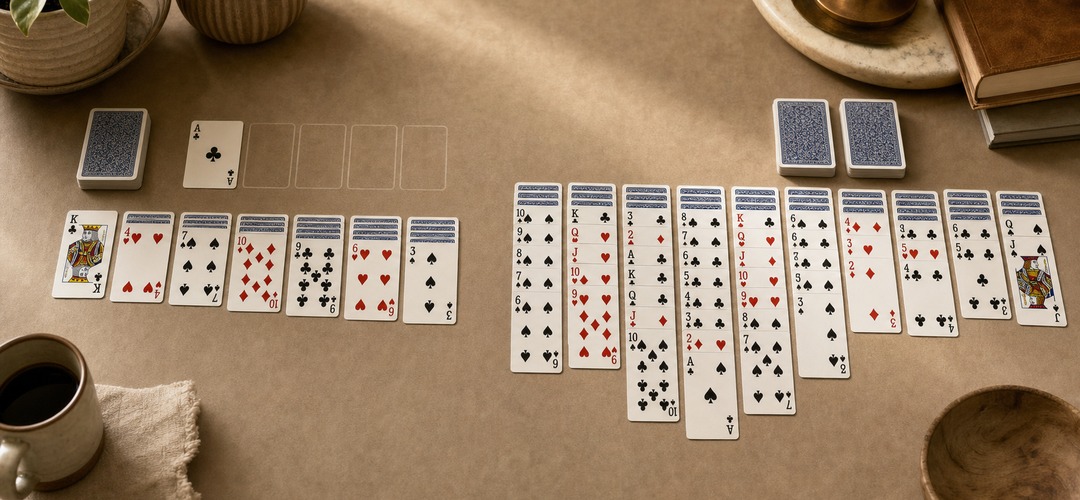
Spider Solitaire Rules
Understanding the basic rules is the first step toward improving your game.
The Tableau
Spider Solitaire begins with 10 tableau columns.
Cards are dealt across these columns, with some cards placed face down and others face up. The top card of each column is normally face up and available for play.
Players move cards between columns to create descending sequences.
For example: 10 → 9 → 8 → 7
Cards can generally be placed on another card that is exactly one rank higher.
For example, a 9 can be placed on a 10.
Building Card Sequences
One important rule is the difference between building a sequence and moving a sequence.
Cards of different suits can often be placed together in descending order. For example: King of Hearts → Queen of Spades → Jack of Clubs
However, a mixed-suit sequence is not considered a complete same-suit sequence.
A properly completed sequence must normally contain cards from the same suit: King → Queen → Jack → 10 → 9 → 8 → ... → 2 → Ace
Once this entire sequence is completed, it is automatically removed from the tableau in most digital versions.
Moving Cards
Players can move individual cards or properly organized same-suit sequences.
For example, if you have: 9♠ → 8♠ → 7♠
this complete same-suit sequence can generally be moved as a group.
However, if the sequence is: 9♠ → 8♥ → 7♠
it cannot normally be moved as one complete unit.
This distinction is extremely important when planning moves.
Empty Columns
An empty tableau column is one of the most valuable resources in Spider Solitaire.
Once a column is empty, players can use it to temporarily store cards or move an organized sequence.
Creating empty columns can dramatically increase your flexibility and is often an important step toward winning.
Dealing New Cards
When there are no more useful moves, players can deal a new row of cards from the stock.
In a traditional Spider Solitaire layout, a new card is added to each of the 10 tableau columns.
However, players should be careful before dealing a new row because it can cover useful cards and make the position more difficult.
Completing a Suit
The main objective is to build complete sequences from: King → Queen → Jack → 10 → 9 → 8 → 7 → 6 → 5 → 4 → 3 → 2 → Ace
When a complete same-suit sequence is created, it is removed from the tableau.
The player wins by successfully removing all required sequences.
Spider Solitaire Difficulty Levels
One of the best features of Spider Solitaire is that players can choose different difficulty levels.
One-Suit Spider Solitaire
One-Suit Spider Solitaire uses cards from only one suit.
Because all cards belong to the same suit, building sequences is much easier.
This version is ideal for:
- Beginners.
- New Spider Solitaire players.
- Learning basic strategies.
- Practicing sequence management.
If you are playing Spider Solitaire for the first time, One-Suit mode is a good place to begin.
Two-Suit Spider Solitaire
Two-Suit Spider Solitaire introduces a second suit, making the game considerably more challenging.
Players must think carefully about which cards should be combined and which sequences should remain separate.
This version is suitable for intermediate players who already understand the fundamentals.
Four-Suit Spider Solitaire
Four-Suit Spider Solitaire is generally considered the most difficult standard version.
It uses all four suits, creating many possible combinations and significantly increasing the need for careful planning.
Four-Suit Spider Solitaire requires:
- Long-term planning.
- Careful sequence management.
- Efficient use of empty columns.
- Good timing when dealing new cards.
- The ability to recover from difficult positions.
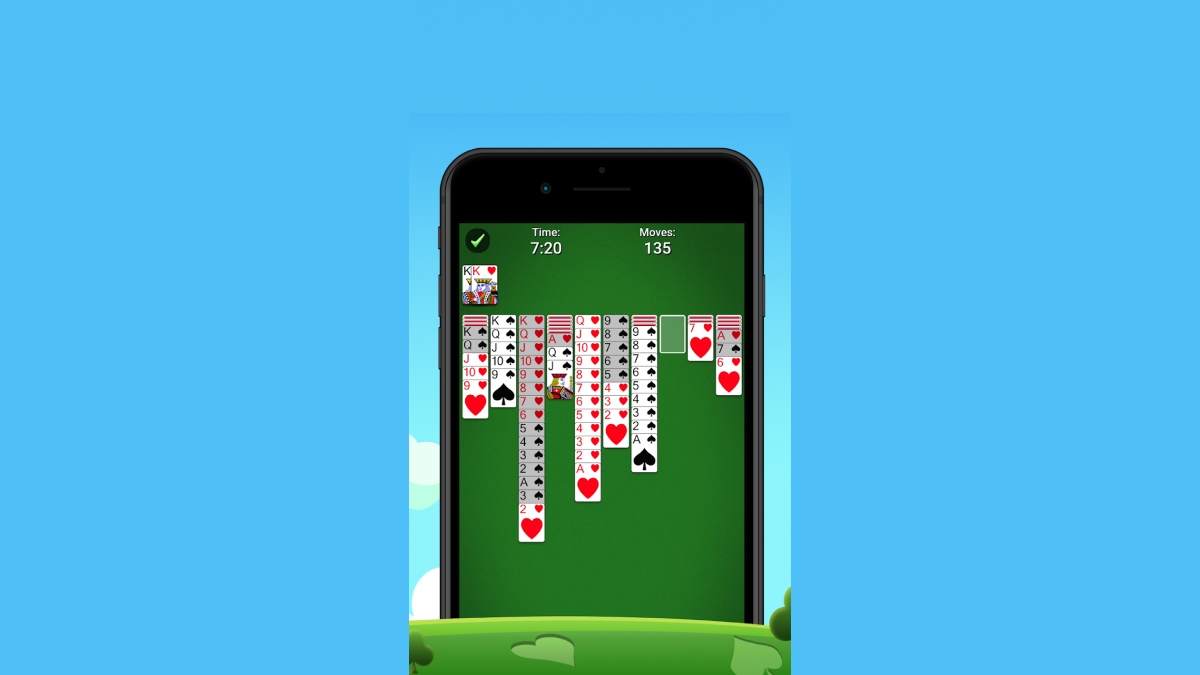
How to Play Spider Solitaire Step by Step
If you are a beginner, follow these basic steps.
Step 1: Examine the Tableau
Before making your first move, look across all 10 columns.
Identify:
- Available face-up cards.
- Cards that can be moved.
- Potential sequences.
- Face-down cards that can be uncovered.
- Possible opportunities to create an empty column.
Step 2: Look for Immediate Moves
Start by identifying obvious descending combinations.
For example, if you can place an 8 on a 9, consider whether doing so will expose another card.
Step 3: Try to Reveal Face-Down Cards
Uncovering hidden cards should generally be an important priority.
The more cards you reveal, the more choices you will have.
Step 4: Build Same-Suit Sequences
Whenever possible, organize cards into same-suit descending sequences.
These sequences are more useful because they can be moved together.
Step 5: Create Empty Columns
Look for opportunities to completely clear a tableau column.
An empty column provides valuable space for rearranging cards and can help you organize difficult sequences.
Step 6: Deal New Cards Carefully
Do not automatically deal a new row whenever the option becomes available.
First, make as many useful moves as possible.
Step 7: Complete and Remove Sequences
Once a King-to-Ace same-suit sequence is complete, it can be removed from the tableau.
Continue repeating this process until all cards are cleared.
Best Spider Solitaire Tips
Knowing the rules is not enough to win consistently. Good strategy is what separates beginners from experienced players.
1. Prioritize Face-Down Cards
One of the best general strategies is to reveal hidden cards as early as possible.
A face-down card represents an unknown resource. Once you uncover it, you may discover a card that creates several new possibilities.
When choosing between two moves, consider which one exposes a hidden card.
2. Build Same-Suit Sequences
Although mixed-suit sequences can be useful temporarily, same-suit sequences are much more valuable.
A same-suit sequence can be moved as a single unit, making it easier to reorganize the tableau.
For example: 10♣ → 9♣ → 8♣ → 7♣ is much more flexible than 10♣ → 9♥ → 8♣ → 7♥
Try to convert mixed sequences into same-suit sequences whenever possible.
3. Do Not Fill Empty Columns Too Quickly
An empty column is valuable because it provides flexibility.
Avoid immediately filling it unless the move has a clear strategic benefit.
Sometimes keeping an empty column available allows you to move a long sequence later.
4. Use Empty Columns Strategically
When you have an empty column, consider using it to:
- Move a same-suit sequence.
- Separate mixed sequences.
- Access blocked cards.
- Rearrange the tableau.
- Build a longer same-suit sequence.
Think of empty columns as temporary storage spaces that can unlock new moves.
5. Avoid Unnecessary Moves
Not every available move is a good move.
Before moving a card, ask what does this move accomplish?
A strong move should ideally:
- Reveal a hidden card.
- Create an empty column.
- Build a same-suit sequence.
- Improve the structure of the tableau.
- Prepare for a future sequence.
If a move does none of these things, consider waiting.
6. Think About the Next Several Moves
Spider Solitaire rewards players who think beyond the current move.
Before moving a card, try to imagine what will happen next.
For example:
Move 1: Place a 9 on a 10.
Move 2: Expose a hidden card.
Move 3: Use the new card to create a same-suit sequence.
Move 4: Clear the column.
Planning several moves ahead can prevent you from creating blocked positions.
7. Protect Important Cards
Some cards are more strategically important than others.
High cards such as Kings can be difficult to move because there is no higher card available within the tableau.
Think carefully before placing a King into a column, especially if doing so will occupy a column that could otherwise be used for a more flexible sequence.
8. Be Careful With Kings
A King can only be placed into an empty tableau column.
This makes Kings particularly important.
If possible, avoid putting a King into an empty column unless you have a clear plan for organizing the cards underneath it.
A poorly placed King can effectively block an entire column.
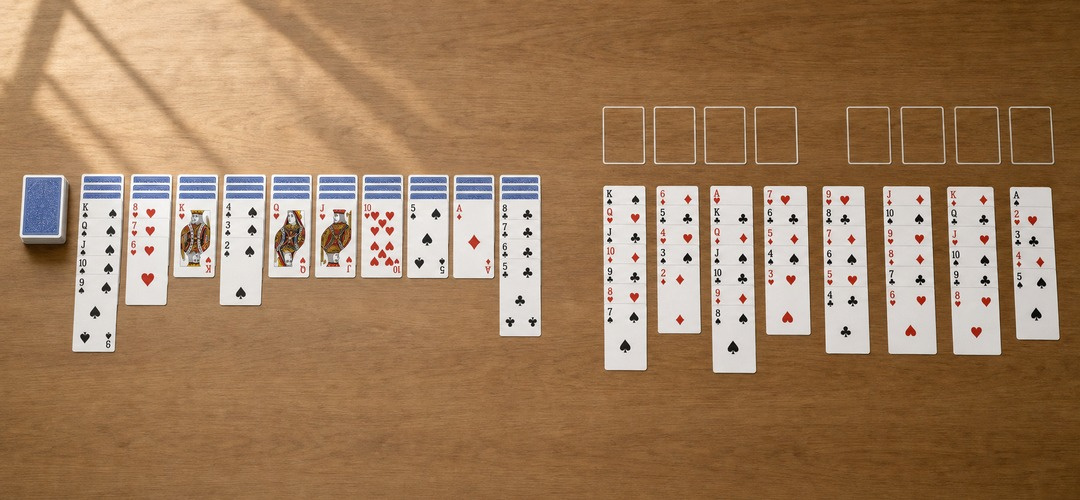
9. Plan Before Dealing New Cards
One of the most common beginner mistakes is dealing a new row too early.
Before clicking the deal button, check whether:
- Any useful cards remain movable.
- You can expose another hidden card.
- You can create an empty column.
- You can improve a same-suit sequence.
Use all available opportunities before adding another row of cards.
10. Avoid Creating Too Many Mixed Sequences
Mixed-suit sequences can make the tableau harder to manage.
For example: 9♠ → 8♥ → 7♣ → 6♦
may look organized, but the cards cannot move together as one complete sequence.
Whenever possible, use moves that help transform mixed sequences into same-suit sequences.
Winning Strategies for Spider Solitaire
Tips can improve your play, but a more systematic strategy can help you win more consistently.
Strategy 1: Focus on Mobility
A strong Spider Solitaire board is one where many cards can be moved.
Try to maintain several available moves instead of creating a position where only one move is possible.
Mobility gives you more opportunities to recover from mistakes.
Strategy 2: Build From High Cards to Low Cards
Spider Solitaire sequences are built from King down to Ace.
Therefore, pay attention to high cards first.
Creating a King-Queen-Jack sequence can provide the foundation for a much longer sequence.
Strategy 3: Create Empty Columns Early
An empty column is one of the strongest strategic advantages in Spider Solitaire.
Once you have an empty space, you can temporarily move a sequence there and gain access to cards underneath another sequence.
Creating even one empty column can sometimes completely change the position.
Strategy 4: Separate Problematic Cards
Sometimes two cards are blocking each other.
Instead of immediately combining them, consider whether separating them will give you more options.
The goal is not simply to create the longest possible sequence. The goal is to maintain flexibility.
Strategy 5: Work Toward Complete Suits
Whenever possible, focus on completing one suit.
A finished suit is permanently removed from the tableau, reducing the number of cards you need to manage.
However, do not sacrifice the entire board structure just to complete one sequence.
Balance short-term progress with long-term flexibility.
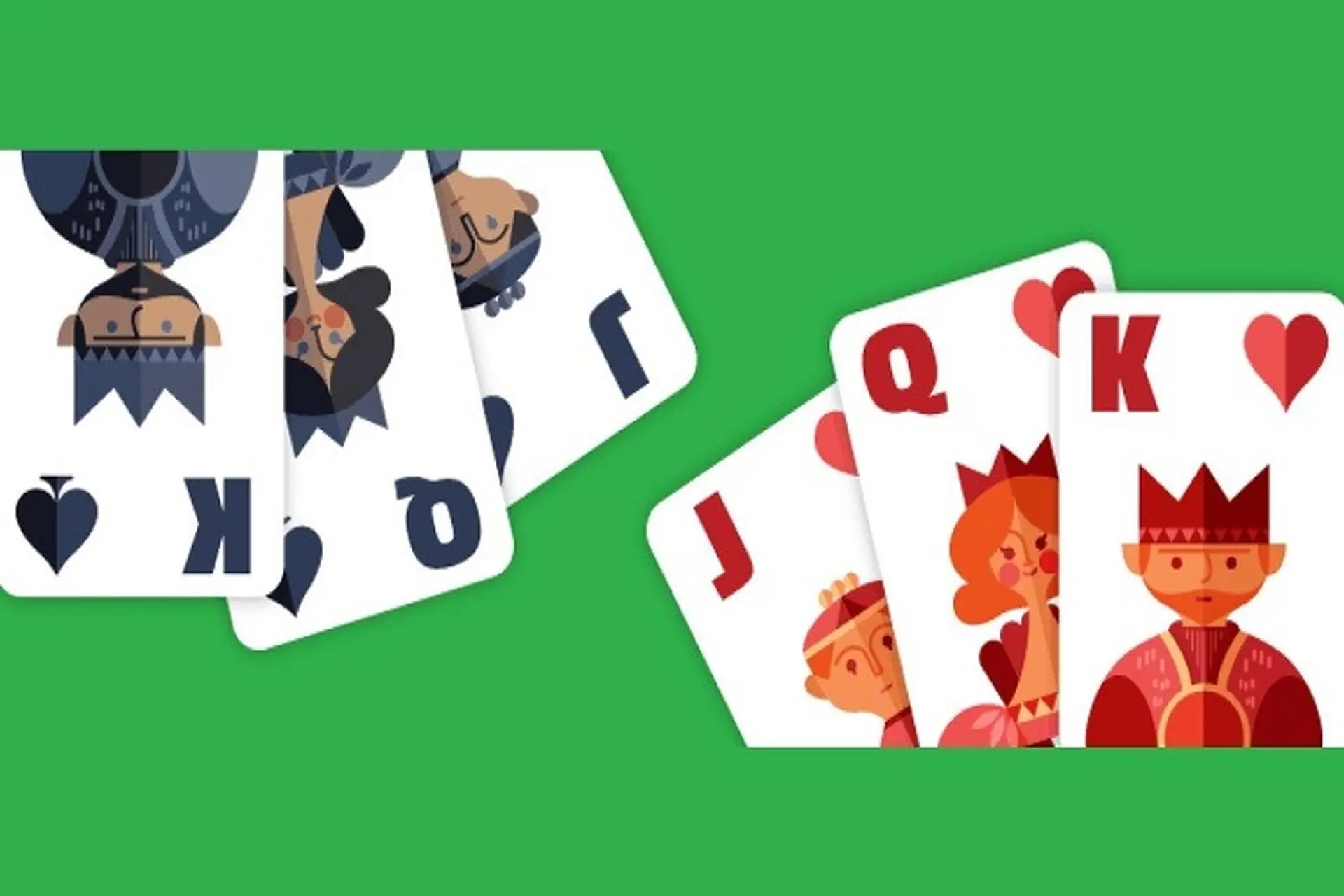
Strategy 6: Use the Stock as a Last Resort
The stock provides new cards, but each new deal can make the tableau more complicated.
Try to exhaust all useful moves before dealing another row.
This simple habit can significantly improve your results.
Common Spider Solitaire Mistakes
Understanding common mistakes is just as important as learning winning strategies.
Making moves without a plan
Moving cards simply because a move is available can quickly create problems.
Filling every empty space immediately
An empty column is valuable. Do not waste it without a clear reason.
Ignoring face-down cards
Leaving hidden cards untouched can limit your available moves.
Dealing too early
Adding a new row before using existing opportunities can make the game harder.
Creating too many mixed sequences
Mixed sequences may look organized but often reduce your ability to move cards efficiently.
Moving Kings without thinking
Kings can only be placed into empty columns, so placing one incorrectly can block valuable space.
Focusing only on immediate progress
Removing one card may look helpful, but the best move is often the one that creates better opportunities several moves later.
How to Improve Your Spider Solitaire Skills
Improvement comes primarily through practice and learning from mistakes.
After losing a game, think about:
- When did your available moves begin to decrease?
- Did you use an empty column effectively?
- Did you deal new cards too early?
- Could you have revealed a hidden card sooner?
- Did you create too many mixed sequences?
- Was there a better way to organize the tableau?
Reviewing your decisions can help you recognize patterns in future games.
Practice With One-Suit Games
One-Suit Spider Solitaire is an excellent training environment.
Because there is only one suit, you can focus on learning:
- Sequence management.
- Empty-column strategy.
- Timing.
- Card organization.
- Planning several moves ahead.
Once these skills become comfortable, move to Two-Suit and eventually Four-Suit Spider Solitaire.

Why Spider Solitaire Remains Popular
Spider Solitaire has remained popular because it combines simple card mechanics with deep strategic possibilities.
Players can enjoy a quick game, but they can also spend considerable time trying to solve difficult layouts.
The game offers:
- Easy-to-understand rules.
- Multiple difficulty levels.
- High replay value.
- Strategic decision-making.
- Free online availability.
- Compatibility with computers and mobile devices.
- A satisfying sense of progress.
These qualities make Spider Solitaire appealing to both casual and experienced card-game players.
Frequently Asked Questions About Spider Solitaire
Is Spider Solitaire easy to learn?
Yes. The basic rules are straightforward, although becoming consistently good at the game requires practice and strategic thinking.
How many cards are used in Spider Solitaire?
Traditional Spider Solitaire uses 104 cards, or two standard 52-card decks.
What is the easiest Spider Solitaire version?
One-Suit Spider Solitaire is generally the easiest version because every card belongs to the same suit.
What is the hardest Spider Solitaire version?
Four-Suit Spider Solitaire is generally considered the most challenging standard version because players must manage all four suits.
Can you win every Spider Solitaire game?
Not necessarily. The difficulty and solvability depend on the specific deal and version. Even experienced players will encounter challenging or unfavorable layouts.
What is the best Spider Solitaire strategy?
There is no single strategy that works for every board. However, revealing face-down cards, creating empty columns, building same-suit sequences, and avoiding unnecessary stock deals are generally effective principles.
Is Spider Solitaire based on luck or skill?
Both factors can matter, but strategic decision-making plays a major role. Players have considerable influence over the outcome through their card management and planning.

Spider Solitaire is a classic card game that rewards patience, planning, and strategic thinking. While its basic rules are easy to learn, mastering the game requires a deeper understanding of sequences, empty columns, hidden cards, and the timing of new card deals.
For beginners, One-Suit Spider Solitaire provides an excellent introduction. Once you become comfortable with the fundamentals, Two-Suit and Four-Suit versions can provide increasingly difficult challenges.
The most important winning principles are simple: reveal hidden cards, build same-suit sequences, create empty columns, protect your available spaces, and think several moves ahead.
With practice and the right strategies, you can improve your Spider Solitaire skills and enjoy more successful games while discovering why this classic solitaire variation remains popular with players around the world.